
WELCOME TO THE BLOG
In-depth articles and resources for coaches and athletes alike.
Focusing on the science and practice of topics spanning periodization, strength
&
conditioning, combat sports, strength sports and sports nutrition.
Articles and work featured on:




Plyometric movements involve a pre-stretch of the muscle-tendon unit in order to create a higher rate of force development. It is crucial to develop this ability in the sport of Muay Thai and Kickboxing as many blocking, kicking and kneeing techniques are plyometric in nature.
![Combat Sports Strength and Conditioning - Microcycle & Within-Session Programming [Part 2 of Programming Layers Series]](https://images.squarespace-cdn.com/content/v1/55072bf0e4b055a8f66250e9/1605708338077-FWV40X4D3O675XD8QX5Q/Shared+from+Lightroom+mobile.jpg)
In part 2 of this article series, we’ll discuss principles and training methodologies that can be used to optimize combat sports training within-session and within the week.
![Combat Sports Strength and Conditioning : Macrocycle & Mesocycle Planning [PART 1 of Programming Layers Series]](https://images.squarespace-cdn.com/content/v1/55072bf0e4b055a8f66250e9/1605110722911-P7CE6O4VILYCVBEJ9R58/muay-thai-jump-rope.jpg)
In this article, we’ll discuss several strategies and philosophies I use when preparing combat sport athletes, which layers they can be utilized in and how a better understanding of programming can help us more effectively coach high-performance combat sport athletes.

This week’s topics discuss the differences between squats and trapbar deadlifts in a training program, the use of a “hypertrophy phase” for combat athletes as well as how to introduce plyometrics in a fighter’s training.

This week’s questions and answers session covers topics such as training session structure, single leg training for power and explosiveness as well as high/low training categorization.

Olympic weightlifting movements in the S&C environment is a controversial topic because some coaches are quite dogmatic about it’s use in power development. There are pros and cons to using them, depending on the context. Coach Jason lays out reasons to use alternatives and in what situations they would be best utilized.

The warm-up is also a component I’ve never stopped trying to refine over the years of coaching. I continuously ask myself: how do I help my athletes reach physiological and psychological readiness in the fastest, most efficient way possible?
A few principles I utilise follows the “RAMP” acronym.
![[Fight Camp Conditioning Guest Post] Bridging The Gap: Conditioning For Combat Sports](https://images.squarespace-cdn.com/content/v1/55072bf0e4b055a8f66250e9/1585917228624-NZJGW93SQK2P6F890J2A/New+article+title+pic.jpg)
My latest guest post on Fight Camp Conditioning covers the complexities of developing conditioning in the world of combat sports.

The main goal of exercise sequencing when training athletic qualities concurrently (plyometric ability, rate of force development, maximum force output, muscular endurance, etc ) is to optimize the training adaptations from each single modality and reduce the detrimental effects of neuromuscular fatigue.
Optimizing exercise order is driven by two interrelated principles: fatigability and priority.

Almost monthly, I receive the question - “What books on strength & conditioning do you recommend?”. And every month I list out several books off the top of my head that I think ANY strength & conditioning coach can benefit from. But the reality is, the content you should be reading will be determined largely by your experience as a coach thus far in your career as well as the education you’ve received up until now.

Had to pleasure of speaking to Hao from Balance The Grind about my career, launching GC Performance Training, balancing coaching and business responsibilities, the myth of work-life balance and plenty more.
![[Published on SimpliFaster.com] Individualizing and Optimizing Performance Training For Basketball](https://images.squarespace-cdn.com/content/v1/55072bf0e4b055a8f66250e9/1559464401554-UTSFUHZQUTNOISFNVX1P/Daryyl-Wong-Court.jpg)
In the world of performance training, a needs analysis of the sport is mandatory—but this only represents the first step to a fully optimized training program. Not all athletes of the same position will have the same playing style, and understanding this is important for designing and coaching a training program to optimize performance and injury mitigation.

What was originally planned as a journal for myself, I decided to edit and share with the world. As the title suggests, the list below consists of lessons I have learned throughout the years in the field of strength & conditioning and coaching. Many of them were unexpected and hard to bounce back from. But all of them made me a better coach at the end of the day.

Push-ups are one of the most commonly used exercises among fitness buffs and elite-level athletes. As a closed-chained exercise that targets the chest and upper body musculature, push-ups are highly effective for improving upper body pushing strength and endurance, and can be done with no equipment.

Having coached many competitive powerlifters for the last 3-4 years, I've noticed common areas in the realm of training and recovery that many strength athletes neglect. Either the importance of these areas have not been stressed enough by their coaches and the environment they lift in, or the athletes fail to see the impact it plays on their powerlifting performance.

Part 2 of this core stiffness article series will cover the core training principles and methods that drive short and long-term improvements in performance.
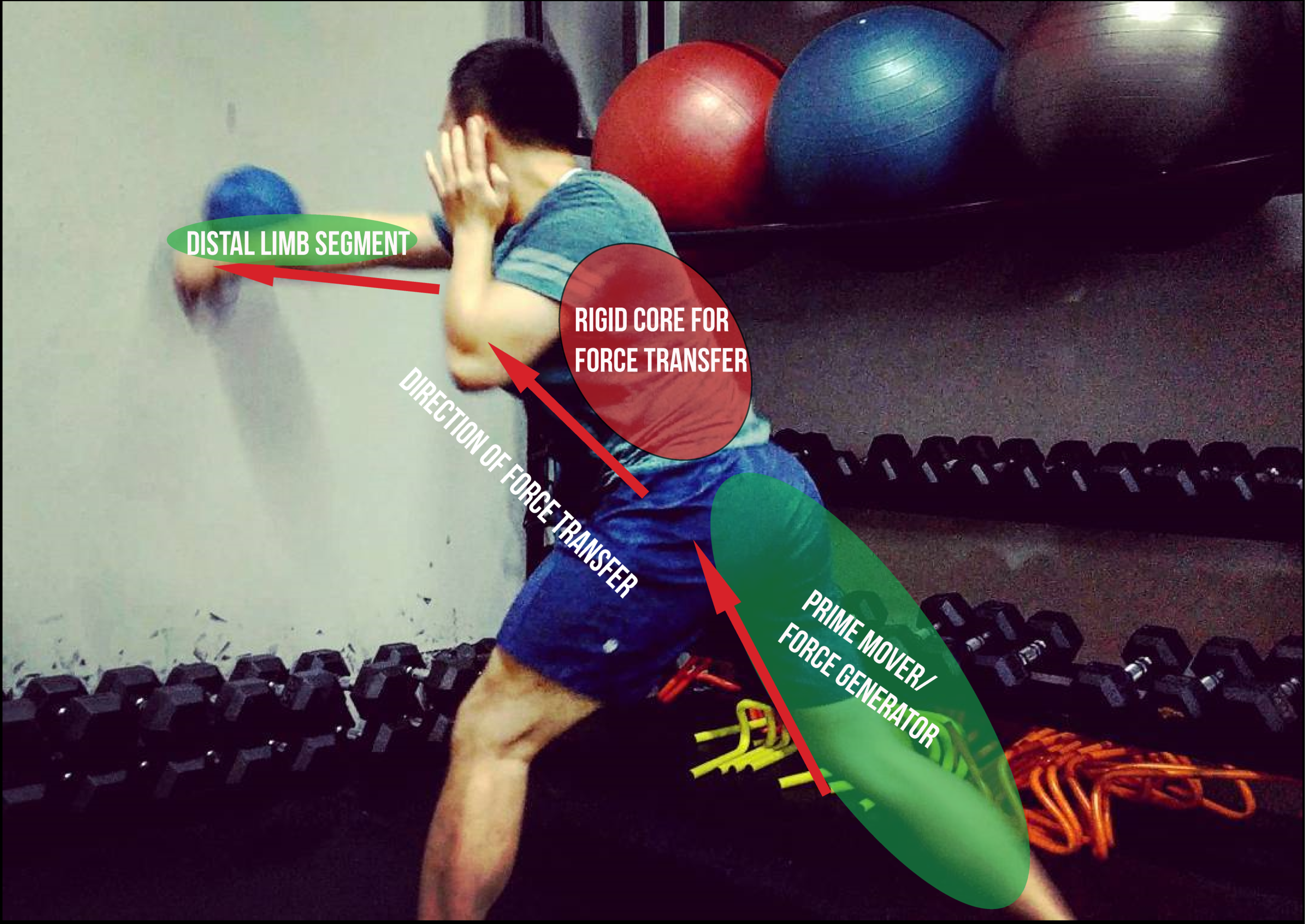
This article will overview the concept of core stiffness and how it's applied to several sporting performances and movements. Core stiffness may refer to the core's ability to maintain stability in response to the influence of external forces, which may vary in magnitude, direction and speed.


With the pride, fame, and money that comes with prize-fighting, it's extremely important for strength and conditioning coaches to ensure the fighters are in top physical condition come fight night - the fighters' health depend on it.Strength and conditioning work must be balanced with martial arts skills training and psychological performance and therefore presents a complex problem for performance coaches to solve. Luckily there are professionals in the field to do just that - create strong and healthy athletes to elevate the sport of MMA.

Recently, there's been some discussion about the differences in periodization for hypertrophy/muscle gain vs. strength and I just wanted to clear the air and give my take on it.

Much of periodization has been focused around physical training, and how micro, meso, and macrocycles can be set up to aid in the improvement of strength, power and endurance. The periodization of skill acquisition and practice however, has yet to be examined to the same degree. In this article, I review a research paper by Farrow & Robertson (2016) and breakdown the "SPORT" framework of skill periodiation.
![Tapering & Peaking: How To Design A Taper and Peak For Sports Performance [Part 2 of Peaking Series]](https://images.squarespace-cdn.com/content/v1/55072bf0e4b055a8f66250e9/1501283047888-1OMY4OC27GHE81P94CPG/mountains-sport-nature-human-mountain-climbing-wallpaper-hd-black-1920x1080.jpg)
Part 2 will cover the details of a proper taper/peaking protocol. The manipulation of training variables will be discussed as well as the performance improvements that are expected from a taper.
![Overreaching and Overtraining [Part 1 of Peaking Series]](https://images.squarespace-cdn.com/content/v1/55072bf0e4b055a8f66250e9/1501052506104-FOT7NYG35KYOVLK3J12R/crossfit.jpg)
Before we dive into the specifics of a deloading or tapering protocol, we must better understand why they're needed in the first place. Part 1 will go over the concept of overreaching, overtraining, and what type of stressors and symptoms an athlete might experience as a result of hard training.

First off, what is base building? It's a term I like to use to describe the rudimentary steps a beginner or intermediate strength athlete has to take in order to become successful 1, 3, or even 10 years down the road.
I recently had someone ask me whether getting the FMS certification was worth it. Like many questions, I answered... "it depends".

This article is a reflection of the current state of the fitness industry and my opinion on the most commonly debated topics.

Picking up a new skill or committing to a new lifestyle change can be difficult, even down right daunting for some. As someone who constantly tries to challenge himself and help others overcome their biggest barriers, I see a big common obstacle holding people back.

Anyone who's followed a diet will notice that consuming less food can often result in lower energy levels throughout the day, negatively affecting our mood and most importantly, our activity levels. The better alternative is to eat a bit more to sustain a more active lifestyle. Learn more in this article!

Concurrent Training is the combination of resistance and endurance training in a periodized program to maximize all aspects of physical performance. This article will review the science behind concurrent training and help you get the most out of your training sessions.
The traditional Muay Thai warm-up that many fighters comfortably default to leaves a lot of stones unturned when it comes to getting the most out of your Muay Thai training. Here is a 3-phase comprehensive Muay Thai warm-up to ensure you’re performing at your best each session.